THE STONE
What is Marble?
What is this widely used and appreciated stone known for its brilliance and timeless character?
Origin of the word marble
The etymology of the word "marble" dates back to the Latin marmor, which itself derives from the ancient Greek mármaros, meaning shining stone. Its decorative use dates back to Roman times. Today, the term "marble" generally encompasses all calcareous stones capable of being polished to a shiny appearance, even including non-calcareous stones like serpentinite, often used in interior decoration.
Today, the term marble generally encompasses all calcareous stones capable of being polished to a shiny appearance, even including non-calcareous stones like serpentinite, often used in interior decoration. Geologically, true marble refers to crystalline marble, though three main types of marble are recognized:
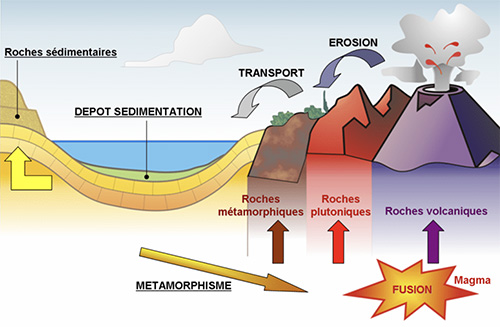
What is the nature of marble and how is it formed?
Marble primarily forms in marine environments, where debris from marine and plant organisms gradually deposits at the bottom in successive layers.
Organisms such as calcareous algae, corals, calcareous sponges, Foraminifera, Bryozoa, Brachiopods, Echinoids, mollusks, crustaceans, and Pteropods play a crucial role in providing the main calcareous substances needed for marble formation.
These organisms are among the earliest forms of life on our planet, as the formation of most marbles dates back to the Precambrian era and extends to the extinction of dinosaurs, the Mesozoic era.
Over the years, sediment layers accumulate, triggering a reaction called diagenesis, a combination of physico-chemical and biochemical processes. This diagenesis contributes to the formation of sedimentary or calcareous rocks. This natural reaction occurs due to the pressure exerted by sedimentary layers and the temperature rise caused by proximity to the Earth's core.
The color and texture of marbles
Even when highly crystalline, marble is rarely pure white. Depending on its source material or foreign substances incorporated during the metamorphism process, it generally appears banded, veined, flamed, spotted, or mottled.
Difference between marble and limestone
The difference between marble and limestone lies mainly in their formation and composition. Marble is a metamorphic rock derived from limestone, formed by the metamorphism process involving physical and chemical transformation under heat and pressure. It is characterized by a crystalline texture, often shiny, and a wide variety of colors and patterns.
Marble is generally used in artistic and architectural applications due to its beauty and durability. Conversely, "crystalline marble" or limestone refers specifically to a type of marble characterized by visible crystals to the naked eye. These crystals often give crystalline marble a translucent or shimmering appearance.
It is often considered particularly valuable due to its purity and clarity, making it a popular choice for high-end decorative applications and sculptures. It is primarily composed of calcite crystals, a crystalline form of calcium carbonate (CaCO3) - one calcium atom (Ca), one carbon atom (C), and three oxygen atoms (O) bonded in a crystalline structure.
In addition to calcite, crystalline marble may contain other minerals in smaller quantities, such as quartz, mica, garnet, or other accessory minerals. However, calcite is the main component that defines crystalline marble. In lithotherapy, crystalline marble is often associated with several beneficial virtues for physical, emotional, and spiritual well-being.
In summary, marble is a metamorphic rock derived from limestone, while limestone is a sedimentary rock primarily composed of calcium carbonate.
Added value
Using these stones will add a unique touch to your interior or exterior, evoking the Earth's depth and testifying to the origin of life on our planet. These stones represent an incomparable richness that will add significant value to your property.
All rights reserved ©
Les Pierres Anangosh
All rights reserved © Les Pierres Anangosh
All rights reserved © Les Pierres Anangosh